Tower Defense Simulator: Updates & Pro Aussie Tips
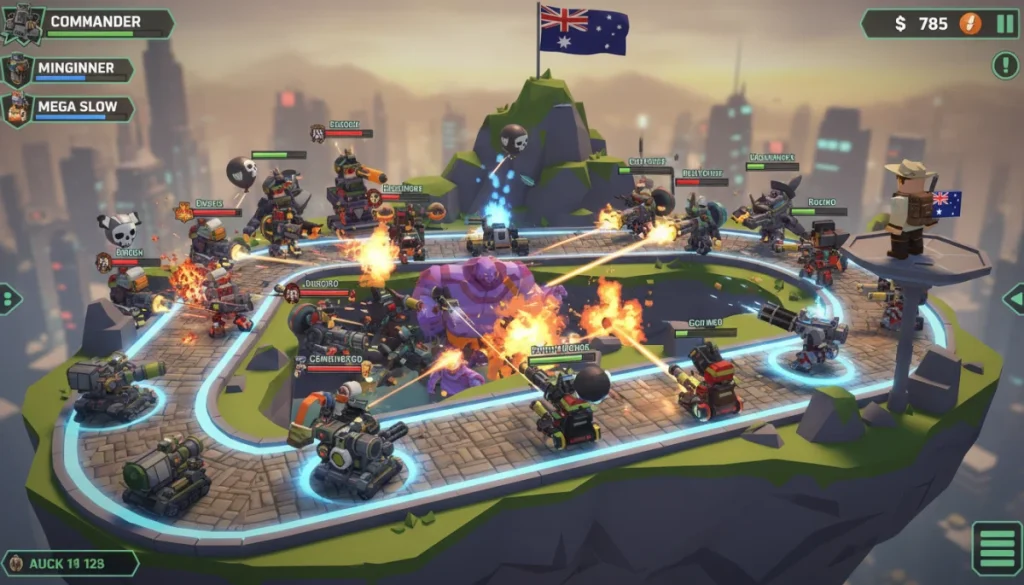
Tower Defense Simulator is a dynamic Roblox experience, constantly evolving with updates that challenge players; mastering it requires adapting to new strategies and leveraging insights from experienced Australian players.
For Australian Roblox enthusiasts, staying competitive in Tower Defense Simulator: Updates & Pro Australian Player Tips is a constant journey of adaptation. This guide dives deep into the latest game changes and shares invaluable strategies from seasoned Aussie players, ensuring you’re always ready for the next wave.
Understanding the Dynamic World of Tower Defense Simulator Updates
Tower Defense Simulator (TDS) is renowned for its consistent flow of updates, keeping the gameplay fresh and challenging. These updates often introduce new towers, enemies, maps, game modes, and sometimes even significant rebalances to existing mechanics. For Australian players, keeping track of these changes is paramount to maintaining a competitive edge and enjoying the evolving landscape of the game.
Each update brings a new meta, shifting the effectiveness of certain towers and strategies. What was once an overpowered combination might become obsolete, while previously overlooked towers could rise to prominence. This constant evolution demands flexibility and a willingness to experiment with new builds and approaches. Understanding the patch notes and community discussions surrounding each update is the first step towards mastering the game’s current state.
Key Update Types and Their Impact
TDS updates generally fall into several categories, each with distinct effects on gameplay:
- Content Updates: Introduce new towers, enemies, or maps, expanding the game’s variety.
- Balance Changes: Adjust the stats of existing towers or enemies, altering their power levels.
- Event Updates: Bring limited-time game modes, challenges, and exclusive rewards.
- Quality of Life Improvements: Focus on bug fixes, performance enhancements, and user interface refinements.
These varied updates ensure that TDS never feels stagnant. Players must continuously adapt, learning new tower synergies and enemy weaknesses. Ignoring these updates can quickly lead to being outmaneuvered by opponents who have embraced the latest changes.
Staying informed about these updates is not just about keeping up; it’s about proactively strategizing. Australian players often utilize community forums, official Discord servers, and content creators to get early insights and discuss potential impacts. This collective knowledge-sharing is a vital part of the TDS experience, especially when new content drops.
In conclusion, the dynamic nature of Tower Defense Simulator through its updates is a core aspect of its appeal and challenge. Successful players, particularly those in Australia looking to excel, must commit to understanding and adapting to these changes, treating each update as a new puzzle to solve rather than a disruption.
Decoding the Latest Tower Defense Simulator Updates: What Australian Players Need to Know
The development team behind Tower Defense Simulator is highly active, regularly rolling out patches that can significantly alter the game’s meta. For Australian players, understanding these specific changes is crucial for optimizing their defensive setups and maximizing their in-game currency earnings. Recent updates have focused on a blend of content additions, balance adjustments, and quality-of-life improvements, all designed to enhance the player experience.
One of the most impactful types of updates involves the introduction of new towers. These additions often bring unique abilities and strategic possibilities, requiring players to rethink their standard loadouts. Similarly, new enemy types can force a complete overhaul of defensive strategies, as their unique resistances or attack patterns demand specific counter-towers. Australian players often quickly identify the most effective ways to integrate new elements into their existing strategies, sharing their findings with the community.
Recent Balance Adjustments and Meta Shifts
Balance changes are perhaps the most influential updates, directly affecting the viability of certain towers. For instance, a recent update might have buffed a previously underused tower, making it a powerful early-game option, or nerfed a dominant late-game tower, encouraging diversification. These shifts mean that relying on outdated strategies can put players at a distinct disadvantage.
- Tower Rebalances: Specific towers like the Minigunner or Commander might have seen adjustments to their cost, damage, or attack speed, impacting their early-game snowball potential or late-game scaling.
- Enemy Health & Speed Tweaks: Changes to enemy statistics, especially for Bosses or special infected, can necessitate stronger crowd control or higher single-target damage towers.
- Map Mechanic Changes: Some maps occasionally receive updates that change pathing, introduce new environmental hazards, or alter buildable areas, demanding new spatial strategies.
Australian players are often quick to test these changes in practice, sharing their findings on forums and social media. This collective effort helps to rapidly establish the new meta, allowing everyone to adapt more efficiently. 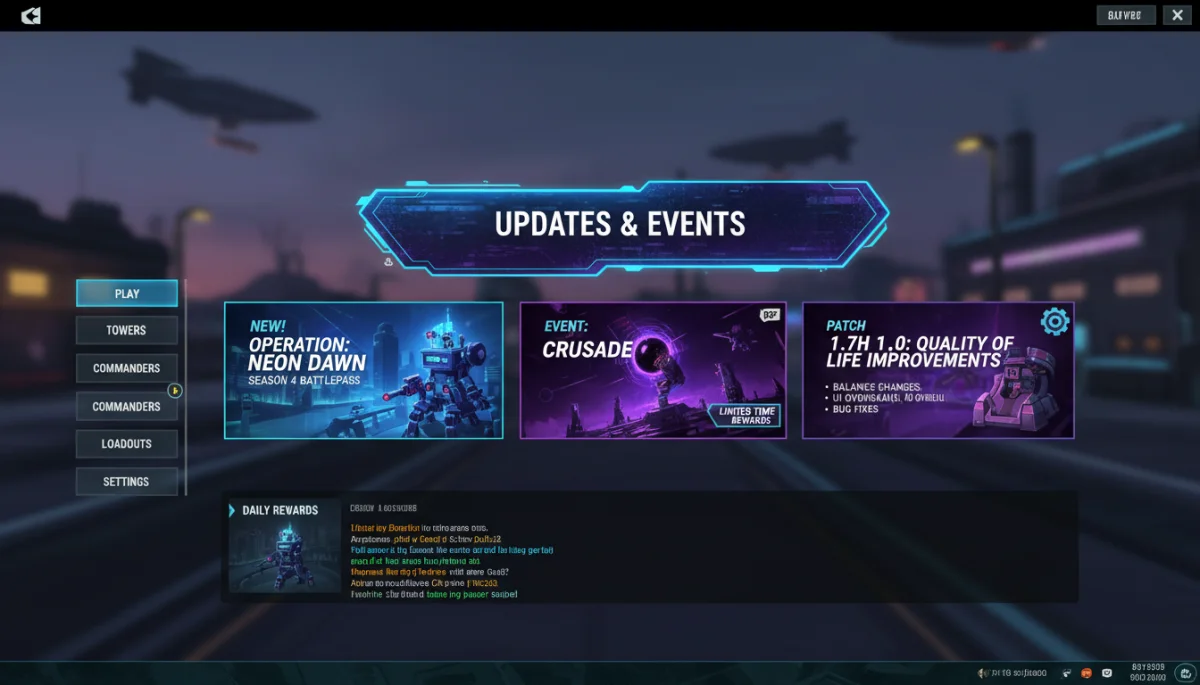
Beyond balance, quality-of-life updates often fly under the radar but significantly improve the overall gaming experience. These can include UI enhancements, bug fixes that prevent frustrating glitches, or performance optimizations that ensure smoother gameplay, especially important for players with varying internet connections across Australia.
In essence, staying informed about the specifics of each Tower Defense Simulator update is not just a suggestion; it’s a strategic imperative. Australian players who commit to understanding these changes are better equipped to dominate the leaderboards and enjoy the full depth of the game’s evolving challenges.
Mastering Early Game: Essential Australian Pro Player Strategies
The early game in Tower Defense Simulator sets the foundation for your entire run. Mistakes made here can snowball into insurmountable challenges later on. Australian pro players emphasize a strong, efficient start, focusing on economy, early defense, and preparing for mid-game transitions. Their strategies often prioritize towers that offer excellent cost-efficiency and adaptability, allowing for flexible responses to unexpected enemy waves.
One common tactic among experienced players is to prioritize economy towers early on, such as the Farm, to generate income. This allows for faster scaling into more powerful defensive options. However, this must be balanced with sufficient initial defense to prevent early leaks. The key is finding that sweet spot where income generation doesn’t compromise your health points.
Optimizing Your Opening Build
A typical Australian pro player opening strategy often involves a careful selection of starting towers. The goal is to maximize damage output and crowd control for minimal investment.
- Starter Tower Selection: Towers like the Scout or Sniper are often favored for their low cost and ability to handle early-game enemies effectively. Some players might even opt for a single, well-placed Demoman for early wave clear on maps with tight chokepoints.
- Economy Rush vs. Balanced Start: While a pure Farm rush can be lucrative, a balanced approach with one or two damage towers alongside an early Farm is often safer, especially in harder game modes or when playing with less experienced teammates.
- Pathing Awareness: Understanding enemy pathing on the chosen map is critical. Placing your initial towers to cover the longest possible path or key chokepoints will maximize their effectiveness and save valuable cash.
Communication is also vital in multiplayer early games. Australian players often use quick chat or voice comms to coordinate tower placements and economy decisions, ensuring the team’s resources are utilized efficiently and no gaps are left in the defense.
Furthermore, understanding the specific wave compositions in the early game is crucial. Some waves might feature fast enemies, requiring quick-firing towers, while others might have armored units, necessitating towers with armor-piercing capabilities. Adapting your early tower upgrades and placements to these specific threats can make all the difference.
In conclusion, a strong early game in Tower Defense Simulator is about smart resource management, strategic tower placement, and a keen awareness of incoming threats. By adopting these Australian pro player strategies, you can lay a robust foundation for success in even the most challenging scenarios.
Mid to Late Game Dominance: Advanced Tactics from Aussie TDS Veterans
Transitioning from the early game to mid and late-game dominance in Tower Defense Simulator requires a significant shift in strategy. Australian TDS veterans understand that this phase is less about survival and more about scaling your defenses, optimizing tower synergies, and preparing for the final, often overwhelming, waves. This involves careful planning, efficient resource allocation, and a deep understanding of advanced tower mechanics.
Mid-game focuses on building out your core defensive line and upgrading your chosen towers to higher tiers. This is where towers like the Commander and DJ Booth become indispensable, providing crucial buffs to your damage towers. Proper placement of these support towers is critical to maximize their area of effect and ensure your main damage dealers are operating at peak efficiency.
Synergy and Strategic Tower Placement
Australian pro players excel at creating powerful tower synergies. This isn’t just about placing strong towers; it’s about making them stronger together.
- Commander & DJ Booth Optimization: Position Commanders to cover as many high-damage towers as possible for their damage and fire rate buffs. DJ Booths should be placed to reduce tower costs and increase range, ideally affecting your entire main defense.
- Stalling and Crowd Control: Incorporate towers like the Slasher or Freezer to slow down tougher enemies, giving your primary damage towers more time to eliminate threats. This is especially effective against high-health bosses or dense waves.
- Area of Effect (AoE) vs. Single Target: Balance your defense with both AoE towers (like the Mortar or Artillery) for clearing large groups of weaker enemies and powerful single-target towers (like the Mini gunner or Accelerator) for bosses and elite units.
Late game often introduces enemies with high health, special abilities, or immunities. This is where a well-diversified defense truly shines. Australian veterans emphasize having a variety of damage types and abilities to counter any threat. For example, having towers that deal splash damage, armor-piercing damage, and strong single-target damage ensures no enemy type can easily break through.
Furthermore, late-game economy management becomes about selling inefficient towers to make way for more powerful, fully upgraded options. Knowing when to swap out an early-game Scout for a late-game Accelerator is a hallmark of an experienced player. 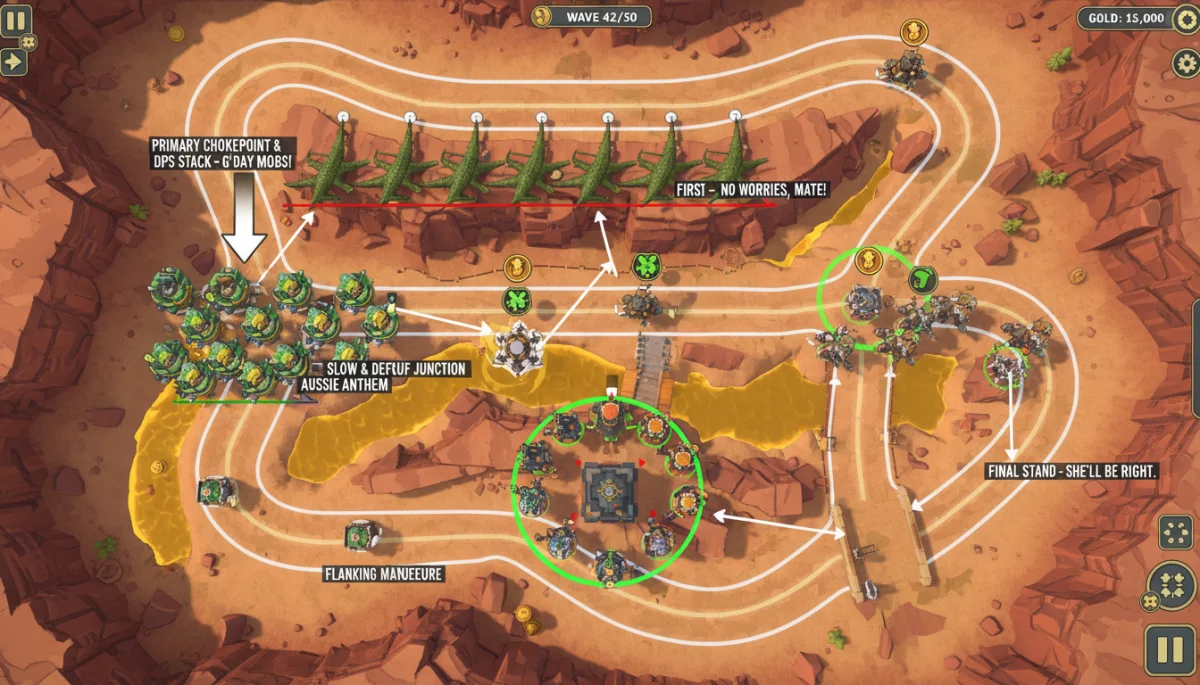
In conclusion, achieving mid to late-game dominance in Tower Defense Simulator is a testament to strategic depth and adaptability. By focusing on tower synergies, optimal placement, and intelligent resource management, Australian players can confidently face and overcome the game’s toughest challenges.
The Australian Community Edge: Collaboration and Learning in TDS
The Australian Tower Defense Simulator community plays a significant role in how local players approach and master the game. Far from being isolated, Australian players actively engage in collaboration, knowledge-sharing, and collective learning, which provides a distinct advantage in understanding new updates and developing cutting-edge strategies. This communal approach fosters a supportive environment where both new and veteran players can thrive.
Online forums, Discord servers, and local gaming groups are vibrant hubs for Australian TDS players. Here, they discuss everything from the latest patch notes and optimal tower loadouts to effective strategies for specific maps and game modes. This collaborative spirit ensures that insights gained by one player quickly disseminate throughout the community, benefiting everyone.
Leveraging Community Resources for Success
- Discord Servers: Many Australian-centric Roblox Discord servers have dedicated channels for TDS, where players share live game updates, coordinate multiplayer sessions, and discuss meta changes.
- YouTube and Twitch Content Creators: Local content creators often produce guides, gameplay videos, and update breakdowns tailored to an Australian audience, offering practical tips and demonstrating advanced techniques.
- In-Game Social Features: Utilizing in-game chat and friend lists for direct communication and forming consistent teams is crucial for tackling harder game modes that require coordinated strategies.
This active engagement not only helps players stay informed but also allows for rapid testing and validation of new strategies. When an update drops, Australian players are often among the first to experiment with new tower combinations or challenge new enemy types, sharing their successes and failures for the benefit of all.
Furthermore, the community aspect extends to mentorship. Experienced Australian TDS players often take newer players under their wing, teaching them the intricacies of the game, explaining complex mechanics, and guiding them through challenging maps. This creates a strong feedback loop that continuously elevates the skill level of the entire community.
In conclusion, the Australian Tower Defense Simulator community is a powerful asset. Its emphasis on collaboration, shared learning, and mutual support provides a unique edge, enabling players to quickly adapt to updates, refine their strategies, and collectively achieve greater success within the dynamic world of TDS.
Optimizing Your Loadout: Tower Selection for Every Scenario
Selecting the right tower loadout in Tower Defense Simulator is a critical decision that can dramatically influence your success across various game modes and maps. Australian pro players emphasize a balanced and adaptable approach, ensuring their chosen towers can handle a wide array of enemy types, from fast-moving scouts to heavily armored bosses. It’s not just about picking the most powerful towers, but rather the towers that synergize best with each other and the specific challenges of the current game.
A well-rounded loadout typically includes a mix of early-game economy, primary damage dealers, support towers, and specialized crowd control or late-game powerhouses. The specific combination will often depend on whether you’re playing solo, with a small group, or a full team, as well as the difficulty and map chosen. Australian players often have several pre-saved loadouts tailored for different situations.
Strategic Tower Combinations
Effective loadouts are built on strong tower combinations that cover all defensive needs:
- Economy Towers: The Farm is almost always a staple for its consistent income generation, allowing for faster tower upgrades and purchases.
- Early Game Defenders: Towers like the Scout or Sniper provide cost-effective defense against initial waves, bridging the gap until stronger towers can be deployed.
- Primary Damage Dealers: Accelerators, Minigunners, and Rangers are often chosen for their high damage output, especially when fully upgraded. Their role is to eliminate the bulk of incoming enemies.
- Support Towers: Commanders and DJ Booths are essential for boosting the effectiveness of your primary damage towers, increasing their damage, fire rate, and range while reducing costs.
- Crowd Control & Specialized: Freezers, Slasher, or Engineer can provide crucial crowd control or specialized damage against particular enemy types like hidden or flying units, ensuring no threat goes unchecked.
Furthermore, understanding the map’s layout is paramount. Some maps have long winding paths perfect for towers with high range, while others have multiple entry points or tight chokepoints that favor splash damage or area-of-effect towers. Australian players often study map layouts meticulously to determine the optimal tower placements and loadout adjustments.
Adaptability is also key. Even with a well-planned loadout, unexpected enemy waves or team compositions might require on-the-fly adjustments. Being able to sell less effective towers and quickly deploy more suitable ones is a skill refined through experience.
In summary, optimizing your Tower Defense Simulator loadout is an art form that blends strategic planning with tactical adaptability. By carefully considering tower synergies, map specifics, and the needs of your team, Australian players can craft loadouts that lead to consistent victories.
Future Outlook: What’s Next for Tower Defense Simulator and Australian Players
The world of Tower Defense Simulator is in constant motion, with developers consistently hinting at future content, reworks, and expansions. For Australian players, looking ahead is not just about anticipation; it’s about preparing for the next evolution of the game. Understanding potential future updates allows for proactive strategy development and ensures players can quickly adapt to new challenges and opportunities. The developers have a strong track record of listening to community feedback, suggesting that future updates will likely address common player requests and introduce innovative gameplay elements.
Potential future updates could include entirely new game modes that test different aspects of tower defense strategy, or further expansions to the roster of towers and enemies, each bringing unique mechanics. There’s also the possibility of more narrative-driven content, offering lore and challenges beyond standard wave defense. Australian players are often keen observers of developer announcements and community speculation, trying to get a jump start on understanding what’s to come.
Anticipated Features and Community Discussions
The TDS community, including its strong Australian contingent, is always buzzing with discussions about what the future holds:
- New Tower Tiers or Prestige Systems: Players often speculate about new ways to enhance existing towers or introduce a prestige system for veteran players, offering new goals and progression paths.
- Expanded Multiplayer Features: Enhanced co-op mechanics, competitive leaderboards, or guild-based challenges could be on the horizon, fostering even greater community interaction.
- Thematic Events and Seasonal Content: Beyond regular updates, more elaborate seasonal events with unique towers, skins, and challenges are always a popular request, providing fresh engagement points.
These discussions aren’t just idle chatter; they often provide valuable insights into player desires and potential developer directions. Australian players actively participate, sharing their ideas and contributing to the overall development conversation, sometimes even influencing future updates.
Furthermore, performance optimizations and bug fixes remain an ongoing priority for the developers. As the game grows in complexity and content, ensuring a smooth and stable experience for all players, including those across Australia with varying internet infrastructure, is crucial. Future updates will likely continue to refine the game’s technical foundation.
In conclusion, the future of Tower Defense Simulator appears bright and dynamic. For Australian players, staying engaged with community discussions and developer announcements is key to anticipating and preparing for the next wave of content, ensuring they remain at the forefront of TDS strategy and enjoyment.
| Key Aspect | Brief Description |
|---|---|
| Game Updates | Regular updates introduce new content, balance changes, and events, constantly shifting the game’s meta and requiring player adaptation. |
| Early Game Strategy | Focus on efficient economy building and cost-effective initial defenses to set a strong foundation for later waves. |
| Late Game Tactics | Emphasize tower synergies, optimal support tower placement, and a diverse defensive lineup to handle powerful late-game threats. |
| Aussie Community | Active collaboration and knowledge-sharing within the Australian player base enhance collective learning and strategic development. |
Frequently Asked Questions About Tower Defense Simulator
Tower Defense Simulator receives updates fairly regularly, ranging from minor bug fixes and balance adjustments to major content additions like new towers, maps, and seasonal events. The development team is quite active, ensuring the game environment remains fresh and challenging for players.
For the early game, cost-efficient towers like the Scout and Sniper are highly effective for managing initial waves. Many pro Australian players also prioritize an early Farm to boost economy, allowing for faster progression to stronger defensive options.
Australian players actively engage with the global and local TDS communities through Discord servers, forums, and YouTube content. They share insights, test new strategies post-update, and discuss optimal loadouts, fostering a collaborative learning environment.
Support towers like the Commander and DJ Booth are crucial in late-game TDS. They provide significant buffs to damage towers, increasing their fire rate, damage, and range, while also reducing costs. Optimal placement of these towers is key to maximizing overall defensive power.
Yes, each map in Tower Defense Simulator has unique layouts, enemy pathing, and buildable areas that demand specific strategies. Pro Australian players meticulously study map specifics to optimize tower placement, select appropriate loadouts, and exploit chokepoints for maximum effectiveness.
Conclusion
Navigating the ever-evolving landscape of Tower Defense Simulator requires not just skill, but a commitment to continuous learning and adaptation. For Australian players, staying abreast of the latest updates, understanding meta shifts, and leveraging the collective wisdom of the community are indispensable for achieving sustained success. From mastering early-game economy to orchestrating powerful late-game synergies, the journey through TDS is rich with strategic depth. By embracing these insights and actively engaging with the game’s dynamic nature, players can ensure they are always prepared for the next challenge, continuously refining their tactics to dominate every wave and secure victory.
